




The sovereign AI workbench for drug development

A co-scientist designed to help research teams turn data and ideas into discoveries and evidence-backed decisions, faster.

  • Hosted in the EU
  • Every analysis sandboxed
  • Zero data retention

One project, from a workflow to a registered finding

Multiple sclerosis · genetic evidence for repurposing

One workspace, from target to trial

From understanding the biology to running the clinical trial, each decision builds on the evidence before it.
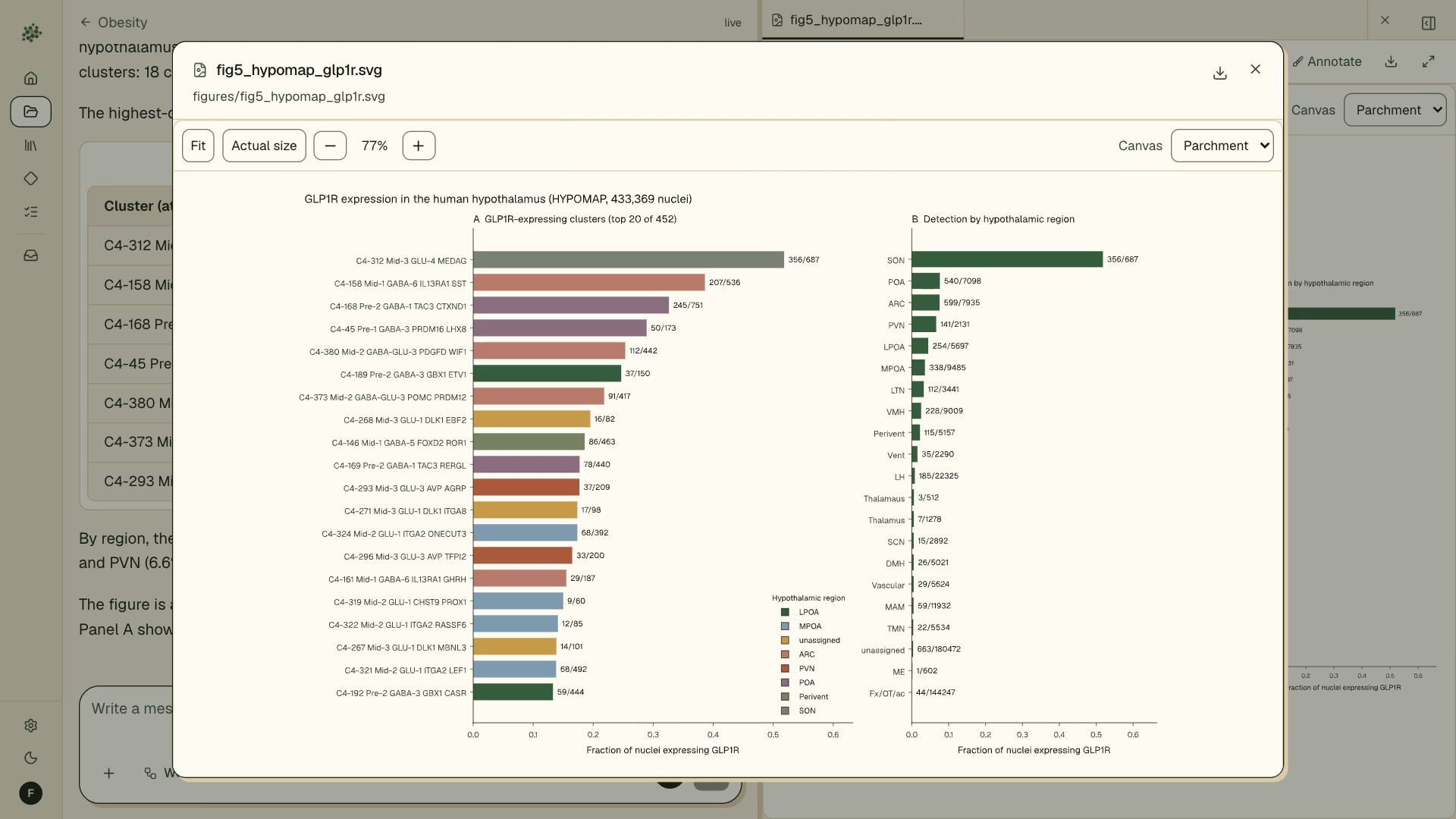
Decode the biology

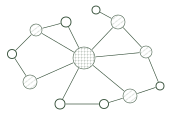
Query public genetics, expression and drug data, and surface the targets, pathways and cells involved.

Example: Shortlisting obesity targets, then asking which hypothalamus cells express GLP1R

Recorded from real runs in Zatoona Labs, sped up.

How Zatoona Labs works

Start with the question, not the setup

The databases, packages and methods your team would otherwise install, license and maintain, kept current in one place.

  • 88 workflows
  • 47 databases
  • 58 packages & methods
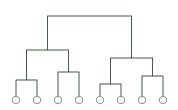
  • Drug Target Identification
  • Single-Cell RNA-seq Pipeline
  • Molecular Docking
  • ADMET Prediction
  • PK Modeling
  • Clinical Trial Landscape
  • Draft Clinical Trial Protocol
  • Gene Set Enrichment Analysis
  • Virtual Screening
  • Survival Analysis
  • Genetic Evidence for Repurposing
  • Biomarker Discovery
  • Protein Structure Analysis
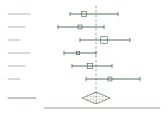
  • Meta-Analysis
  • Signature Reversal Screen
  • Spatial Transcriptomics
  • Lead Optimization
  • Dose-Response Analysis
  • Prior Art & Failed Trial Check
  • Multi-Omics Integration
  • Open Targets
  • ChEMBL
  • ClinicalTrials.gov
  • PubChem
  • DrugBank
  • UniProt
  • Ensembl
  • GEO
  • gnomAD
  • GTEx
  • Reactome
  • KEGG
  • STRING
  • RCSB Protein Data Bank
  • openFDA
  • Europe PMC
  • OpenAlex
  • Semantic Scholar
  • DepMap
  • DisGeNET
  • BindingDB
  • Guide to Pharmacology
  • PRIDE
  • bioRxiv / medRxiv
  • scanpy
  • Refutation engine
  • RDKit
  • statsmodels
  • Signature reversal
  • scikit-survival
  • PyDESeq2
  • Knowledge-graph repurposing
  • AnnData
  • Biopython
  • RWE causal analysis
  • DeepChem
  • ESM
  • Genetic target evidence
  • DiffDock
  • UMAP
  • Mechanism articulation
  • NetworkX
  • PyMC
  • Pharmacovigilance signals
  • SHAP
  • scvi-tools
  • Prior-art disconfirmation
  • pyOpenMS
  • COBRApy

Proven methods, reproducible results

Curated workflows built on the field's current best practice, ready to run on your data.

Targets

  • Drug Target Identification
  • Biomarker Discovery
  • Perturbation / CRISPR Screen Analysis
  • Protein Structure Analysis

12 workflows

Repurposing

  • Drug Repurposing
  • Genetic Evidence for Repurposing
  • Signature Reversal Screen
  • Prior Art & Failed Trial Check

8 workflows

Omics

  • Single-Cell RNA-seq Pipeline
  • Bulk RNA-seq Analysis
  • Spatial Transcriptomics
  • Multi-Omics Integration

14 workflows

Chemistry

  • Virtual Screening
  • Molecular Docking
  • Lead Optimization
  • QSAR Modeling

9 workflows

Pharmacology

  • ADMET Prediction
  • PK Modeling
  • Dose-Response Analysis
  • Toxicity Prediction

8 workflows

Clinical

  • Clinical Trial Landscape
  • Draft Clinical Trial Protocol
  • Clinical Trial Analysis
  • Real-World Evidence: Comparative Effectiveness

14 workflows

Literature

  • Literature Search
  • Systematic Review Protocol
  • Research Landscape Map
  • Patent Landscape

7 workflows

Analysis

  • Survival Analysis
  • Meta-Analysis
  • Power Analysis
  • Build a Predictive Model

16 workflows

Your own

Adapt a workflow's steps, chain several for a bigger question, or save your own routine for the team.

Scientifically rigorous

Built on the scientific method of conjecture and refutation. Every finding starts as a claim and is challenged by a refutation engine built to break it, so weak findings are caught before they reach the lab or the clinic.

How verification works
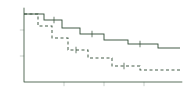
Finding · conjectureIllustrative run

The experimental arm prolongs progression-free survival versus control.

Simulated phase 2 trial · N = 72 · HR 0.43 [0.25–0.76]
  • Specificationother reasonable modelsqueued
  • Data robustnesswithout a few data pointsqueued
  • Literaturewhat published work saysqueued
  • Replicationa comparable datasetqueued
VerdictTesting…
A finding comes back corroborated, weakened or refuted.

Built for sensitive data

Zatoona Labs runs where your data is allowed to be, and within the rules that govern it, from the GDPR to your institution’s own policies.

  • Two ways to run it: on Zatoona Cloud in the EU, or entirely inside your institution
  • Each project gets its own isolated sandbox, with only that project's files
  • An analysis reaches AI models only through a gateway that can be set to your institution's requirements
  • Every login, file and run is recorded in an audit log
How privacy and security work

Zatoona CloudEU

Your data
Sandboxits own virtual machineAnalysis runs here
Gateway
EU-hosted models onlyzero retention, through the gateway

Inside your institution

Your data
Sandboxits own containerAnalysis runs here
Gateway
Your own models, or EU-hostedhosted inside, through the same gateway
Outside world
  • EU-hosted modelszero retention
  • Scientific sourcesPubMed, ChEMBL, Open Targets

Start with Zatoona Labs

Request early access, on your own or with your team. For an institution, we run pilots with hospitals, universities, research centres and pharma.

Researchers and teams

Your AI workbench, in the cloud

where
Zatoona Cloud, in the EU
models
EU-hosted, zero-retention
for
Scientists, students, labs and small biotechs
Request early access

Institutions

One workbench for the whole institution, where your data lives

where
Zatoona Cloud in the EU, or inside your own environment
models
EU-hosted and zero-retention, or your own hosted models in-house
for
Hospitals, universities, research centres and pharma
Talk to us

Not sure which fits? Write to contact@zatoona.ai